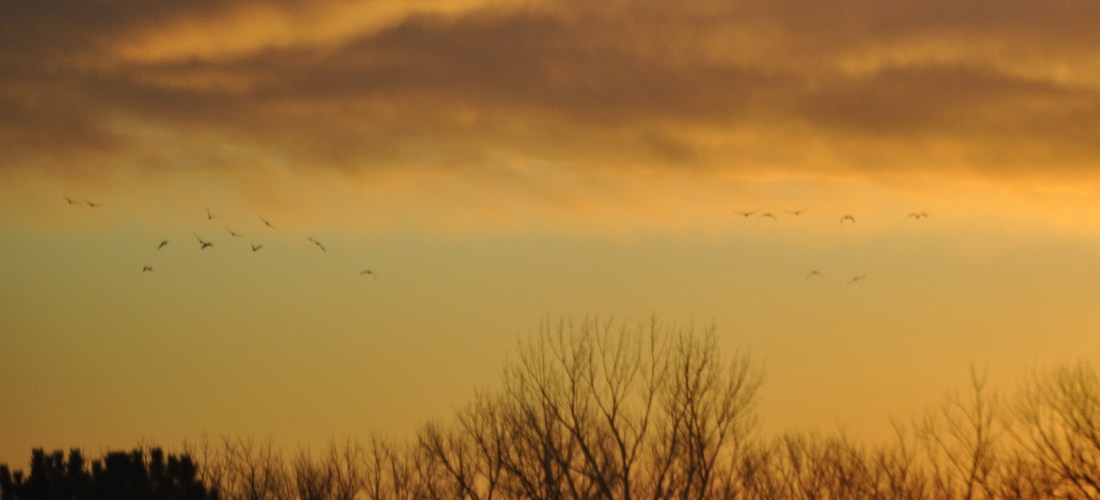
A quick trip to the Platte River crane alley near Grand Island on April 1, 2020 showed virtually no visitors as the blinds and sanctuaries were closed.
However, there were still plenty of cranes to view for Delaney and Ella who ventured out early on that morning. Cranes were found on the fields and the girls had time to enjoy their ritual dances following a beautiful sunrise that graced the Platte River valley.
The Sandhills Cranes migration is an annual 6-week event that attracts visitors from all over the state, nation and world. The bird was once on the endangered species list, but through conservation efforts, there are now close to one million.
“It’s cool to be one of the few areas where 90% of the Sandhills Cranes are,” said Kristin Carder, digital media manager with the Nebraska Game and Parks Commission. The birds spread out all over North America after congregating densely in Nebraska for around six weeks.
“You can look forward to it no matter what the situation. People can still drive by them and see them in safety. It’s a special phenomena to witness,” she said.
Video and photos by Jennifer Knight, except where mentioned.
As communication staff for the large, diverse Omaha Public School District, both Jeremy Maskel and Maggie Cunningham have similar thoughts on the importance of networking and learning new skills in the media field.
“There are no substitutions for building those relationships,” said Maskel, as he spoke to UNO communication students on April 27, 2020.
Both Maskel and Cunningham came to OPS and the world of public relations after experience first in television newsrooms. Both had a variety of different positions since their college years; and they eventually ended up working together at Omaha’s KETV station.
Now at OPS, Maskel is the communications director, and Cunningham handles the social media for the district. They attribute their previous experiences to what has helped make them successful today.
“If you can handle a news environment, you can handle any field. The skills you learn by working can serve you in any field,” Maskel said.
Cunningham mentioned that she learned from her previous experiences how important it is to build relationships with reporters now that she is in a PR setting.
“Build that trust with reporters. Have open communication,” she said. She also mentioned how helpful it is to learn the patterns and routines of reporters as this could ultimately help out the PR professional.
When asked about how to network in a new city, Maskel shared several ideas to the students, including joining professional associations, joining neighborhood groups of interest and seeking out good stories of interest. Cunningham encouraged new journalists to look for beats that aren’t covered often, as well as cold-calling PR directors.
Communication during the COVID pandemic takes so many different forms. While Maskel is grateful for his experiences for his time in the newsroom, he knows the current reporters are exhausted with all of the press conferences and learning new ways to communicate while social distancing.
“I have a huge appreciation for those doing it and still in the newsroom,” he said.
College choices are almost over for the spring. Here is a link to a video about the Nebraska nonprofit group Educationquest. Digital Media Manager Jason Combs talked about the marketing and expectations of seniors when it comes to filling out forms for federal aid.
Short Audio Clip featuring renowned UNO social media Professor J. Lipschultz.
Audio Script for UNO’s Social Media Lab and it’s involvement with rural Nebraska. By Jennifer Knight
Narrator: On UNO’s campus in ASH hall, there’s a windowless small room that has produced a big impact. This room houses theUNO Social Media Lab for Research and Engagement. The lab works with rural Nebraska communities share their news as newspapers are diminishing.
Narrator: Professor Jeremy Lipschultz is one of the founders of the lab which has now helped many communities throughout the state. It all started from a UNO class.
Insert sound bite 1: “J. Lipschultz” 0.33 – 0.51
Narrator: Since that class, they collaborated with UNL and the Dept of Ag Economics and ultimately they became a lab with grant funding to work with rural communities. The lab staff help make plans, teaches different methods, works with town administrators, high schools and even libraries on connecting the community. He mentions that these areas are . . .
Insert sound bite 2: “J. Lipschultz” 1:14 – 1:30.
Narrator: Prof L. said they are teaching the idea that when people tweet and use social media, they are becoming their own local news source and . . . .
Insert sound bite: “J. Lipschultz” 1:39 – 1: 52
Narrator: The UNO social media lab has since been awarded second grant to work with mulitple communities and four counties because they’ve impressed others with the work they are doing.
Narrator: It’s all coming from that small room on the now quiet UNO campus. Reporting for the UNO School of Communication, this is Jennifer Knight.
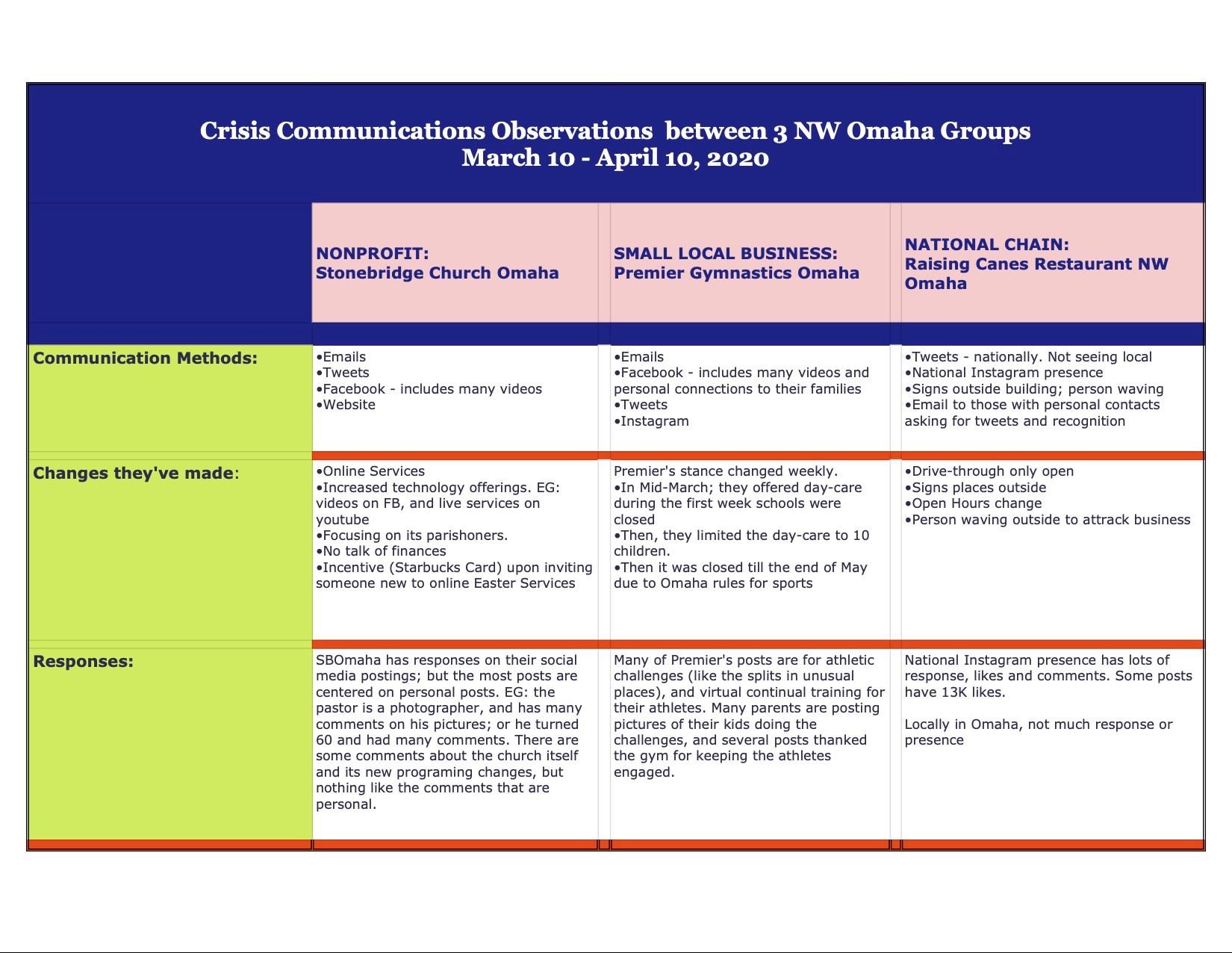
From online workouts, to youth group services, to pleas for more business, the crisis communication methods and results for businesses and nonprofits during the COVID-19 pandemic are all varying, but have the same goal of remaining a viable business.
For this assignment, I looked at three familiar northwest Omaha businesses and non-profits: Stonebridge Church, Premier Gymnastics and Raising Canes restaurant. I have received emails from all three in the last month, and thought I’d compare them.
From my perspective, two the three seem to be handling the situation to the best of their abilities and adapting. The other, Canes, doesn’t seem to have much of an online presence; but cars are still going through their drive-thru because people do like their product.
My thoughts on these three:
SBOmaha: This large urban church is trying to grow its membership and share its message focusing on a younger crowd. It’s very technologically savvy; so the change to online services was probably not too difficult as the church already audio records all services and has video staff.
The service I watched live was seamless; good quality, it provided an online chat during the service; and they offered a Zoom “party” to connect with others afterwards. They’ve offered Instagram youth contests and games and have featured all sorts of interviews and drive through events online. Really, this is pretty smooth.
Its Starbucks gift card promotion over Easter is two-fold. My guess: trying to share its message, and gain new members at the same time. The church has a Sunday morning coffee bar, so the theme fits in, although the promotion seemed slightly odd in my point of view.
I’m guessing the church is concerned about finances and giving as it completely relies on donations for its operations, and it has had no on-site services for a month. However, years ago the church designed an app for regular giving, and it’s used widely. At this point, no communication has focused on giving/funds. I have heard of other churches laying off staff; at this point Stonebridge has not.
GRADE: A. They are doing a good job under the circumstances. I’m basing this off their interaction, consistent communications, and no monetary pleas. Facebook link here.
Premier Gymnastics: Premier Gymnastics is a small, two-owner business in NW Omaha. Its members sign yearly contracts for its servicess of youth gymnastics and other similar sports. Its contact via email and Facebook is mainly with parents; its Twitter and Instagram pages are aimed at both parents and youth.
During the last month, I started watching their communications and plans as I am on their email list. I know this group is concerned with the bottom line from interaction with them the last 15 years. Their plans for day care kept slimming down over the last month, but they started off optimistically.
They have built-in members, and right now really aren’t focused on gaining new members, but rather keeping their families happy. These members pay monthly contract fees, and for the first time ever, they are giving those families a tuition break for the month of May. They have offered many classes online for at-home practice.
GRADE: A. Good crisis communication, and they are being adaptable to keep their customers happy; although it is costing them, I’m sure.
Raising Canes NW Omaha: Raising Cane’s in NW Omaha has donated to my volunteer group; and along with many others throughout Omaha we received an email plea for help in return for their donation last year. Fair is Fair, smart idea. From that, I have seen a few social media requests to encourage drive-thru patronage from different groups throughout the metro area.
But besides that, I am not seeing much talk about Raising Cane, and I see very little information or presence from the local restaurant. Nationally on Instagram they are active and well liked but locally, there’s just an upkept Facebook page, and a few tweets.
It’s a completely different business model of course than the other two above groups. They did make an effort to reach out; however I hope they can locally do more to keep their business viable.
GRADE: C- Locally they are struggling; nationally they are staying strong.
Narrator: Social media is embedded in the structure of non-profits and small businesses. Yet, often times these groups dont have the dedicated staff or resources and they look to firms which specialize in these areas.
Narrator: Suzi King of Omaha, is one such business owner several years of working at a nonprofit herself. Amongst other tasks, she helps these small groups. She pushes the message of consistency.
Insert sound byte 1: “Suzi King” 0:35-0:51
Narrator: Suzi helps businesses plan a consistent message both graphicaly and with content across many platform. She feels the message works best if it originates organically from her client.
Insert sound byte 2: “Suzi King 1:04 – 1:30”
Narrator: As we are focusing on social media with non-profits and small groups in this series, it’s good to hear how the message of consistency regularly takes top spot . For more information about suzi’s work, visit YouradminBff.com.
Narrator: For the UNO School of Communication, I’m Jennifer Knight.
Please click for a 1+ minute short story about social media and nonprofits.
There are no sports, celebrity gatherings, concerts or even riots to report during the COVID-19 pandemic in Spring, 2020.
The world is quiet.
Yet Jodean Brownlee, UNO lecturer and student advisor for the campus radio station, gave a message of encouragement for learning how to report in such a climate to a beginning journalism class over Zoom at the end of March.
“You can learn new things right now,” she said. “You can be a good student. This will make us more creative.”
To keep that focus of learning, Brownlee had several suggestions. One included downloading and learning new applications, such as the Adobe Suite Premier Rush app.
“There are so many apps to use. Try new apps and new ways,” she said.
Along with new apps, she gave some practical tips of taking video on the landscape setting to fully show other people’s stories; and to help others not lose their sense of place.
She also recommended starting video blogs as a way to document the events and emotions of the times. Although there are both pros and cons of letting emotions show during trying times, she said that others in the future will be looking at our reactions.
Brownlee also acknowledged how these are scary times for all; and encouraged the students to find the truth in reporting during times such as this.
Facts can get easily mis-interpreted, and the truth can easily be convoluted in one’s mind, she said. With so much information swirling around, the truth can easily be lost.
This happened to her recently; where she read and believed some wrong facts concerning the COVID-19 pandemic. The false news made her very nervous; and it prompted her to find the truth.
“I implore people to look at the web sites that are the original source,” she said.
While these times are not easy, there are still opportunities to learn. And learning new programs, new tricks of the trade, learning to search for the truth will only help budding students.
“The more things you can do in this industry, the more stable your job will be,” she said.
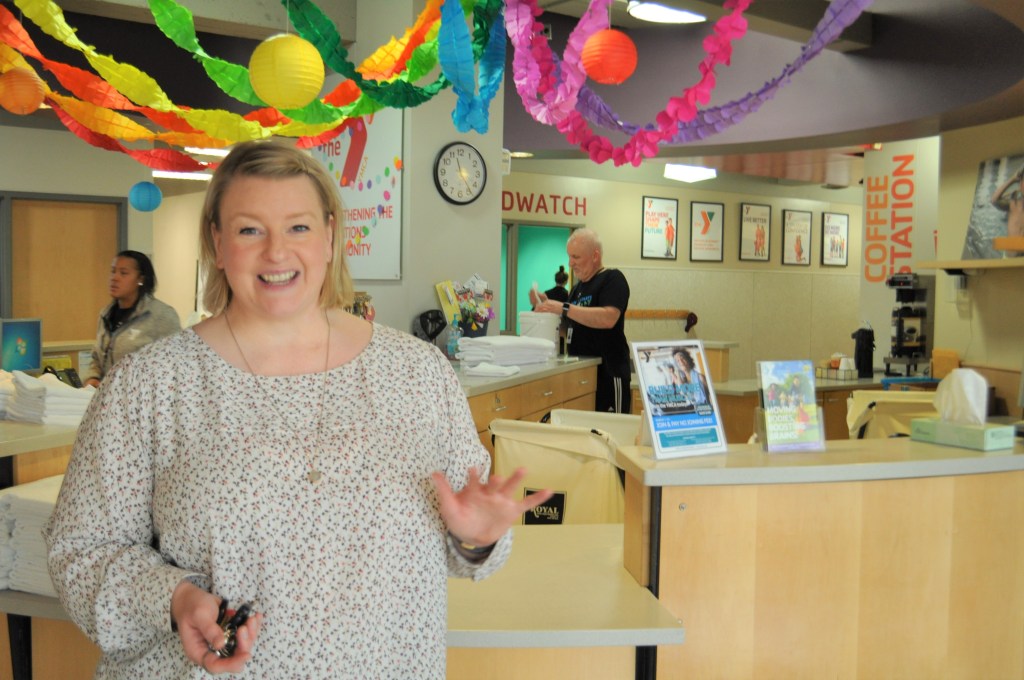
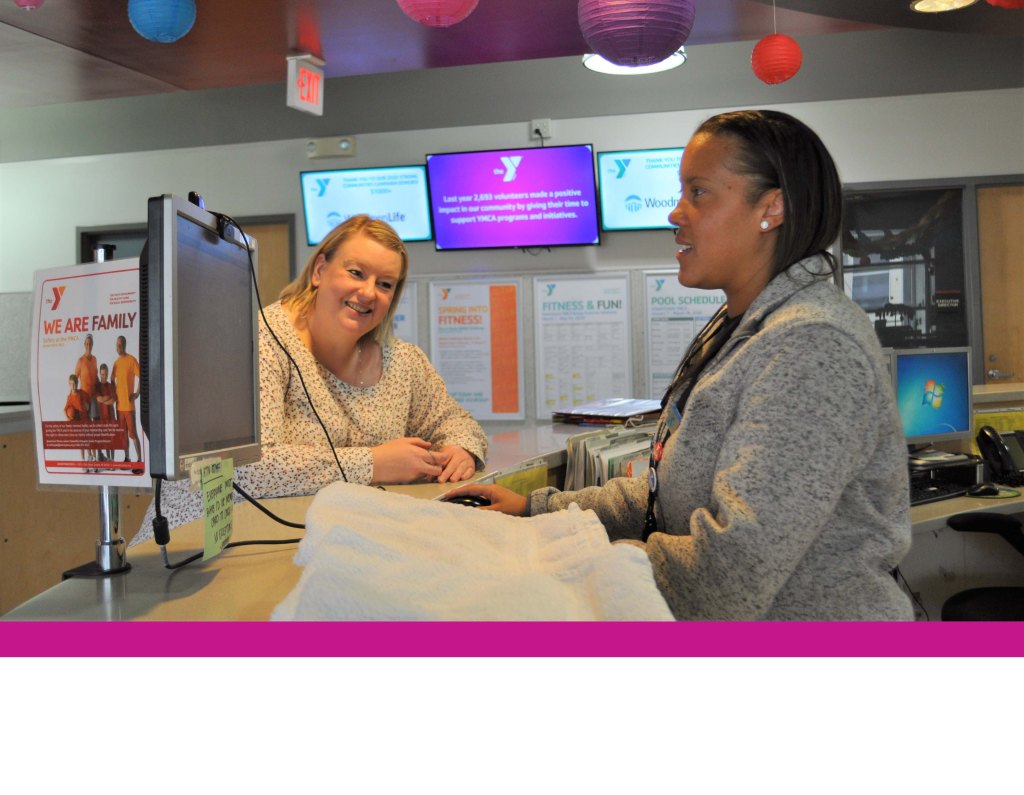
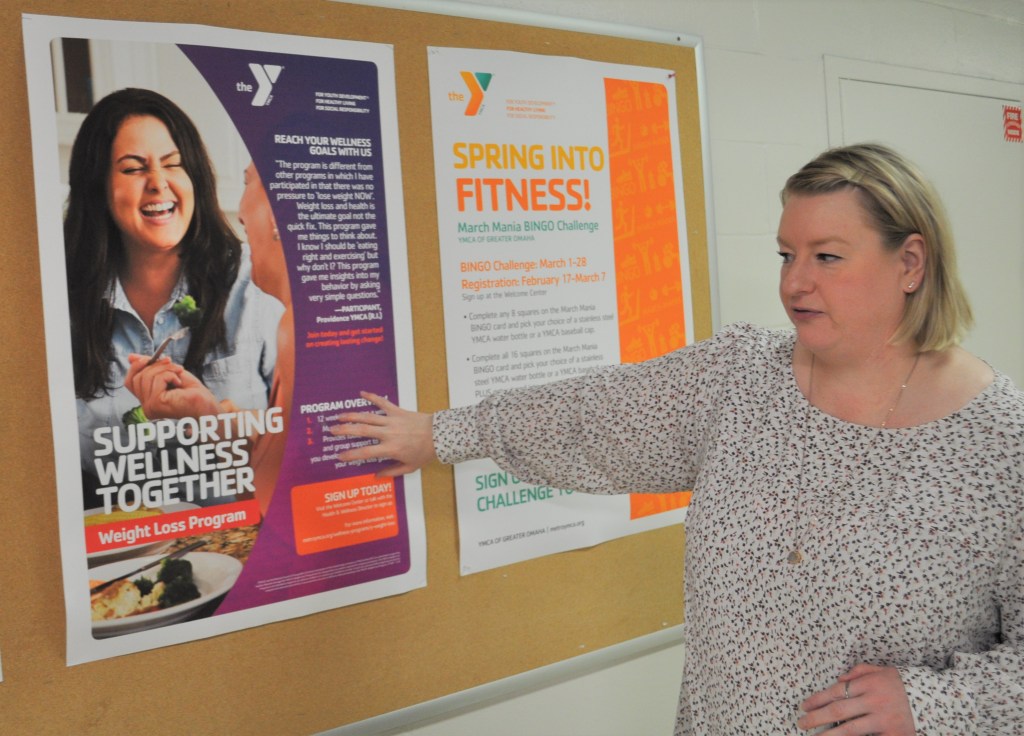
Jodi Cramer, marketing manager with the YMCA of Greater Omaha, gives a warm welcome to visitors at the Downtown YMCA, just days before the Y closed for the COVID-19 pandemic March 17, 2020.
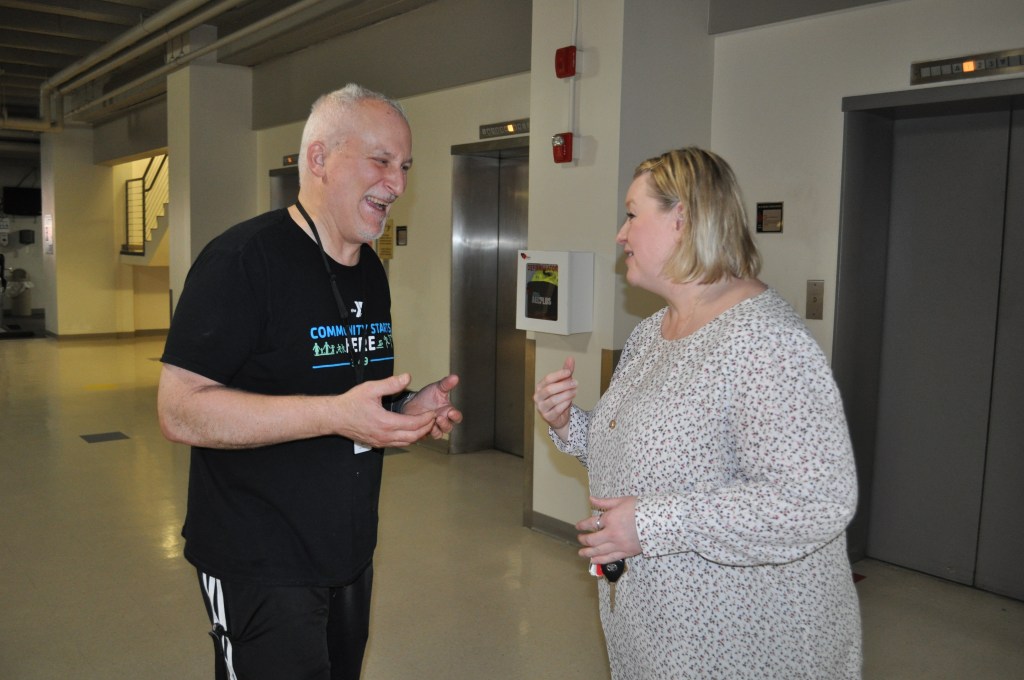
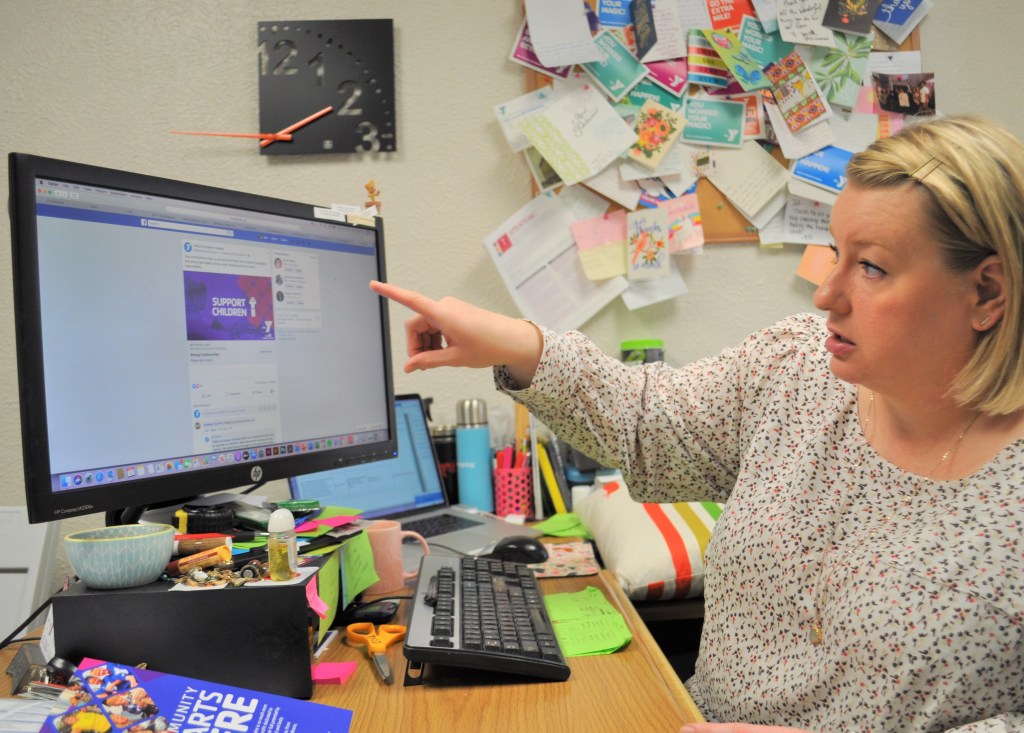
With the future rules of the COVID-19 still unknown, Jodi and staff member Robert discuss how the YMCA will communicate its news and upgraded sanitation policies with its members via Facebook and email.
Facebook is the top social media outlet for the 10 metro area YMCAs. They all have similar looks and follow the same brand guidelines.
Customer service is paramount both in person and online. Cramer says this about Facebook customer service: “We have comments, good and bad. We always respond. As a rule if there’s cussing we will remove and block. If it’s critical, we will respond in a positive manner.”
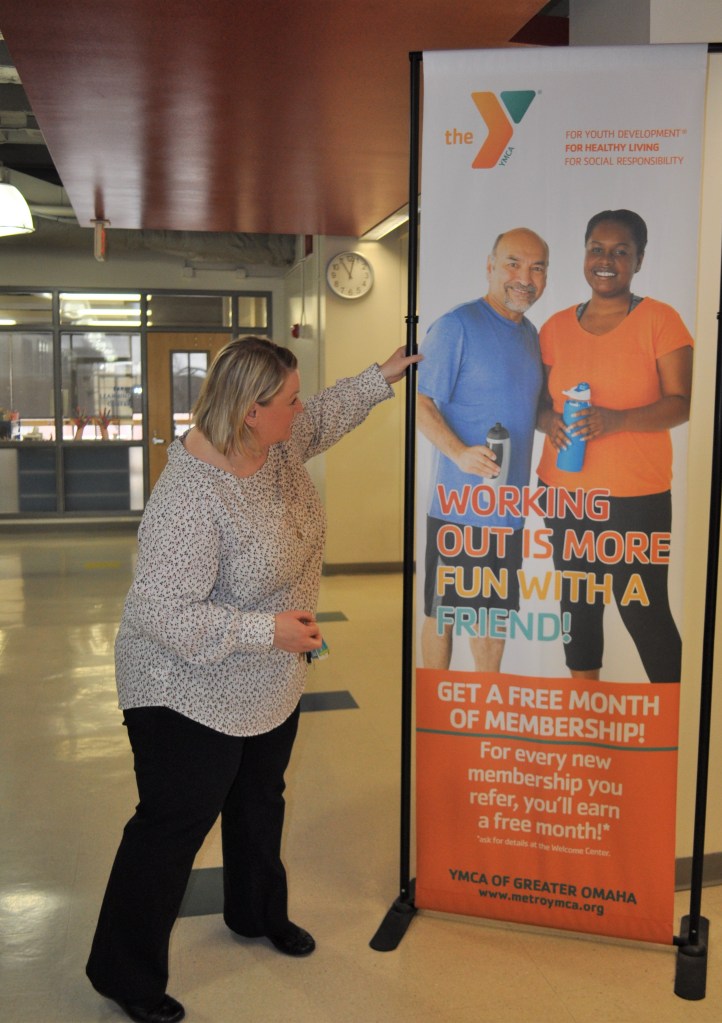
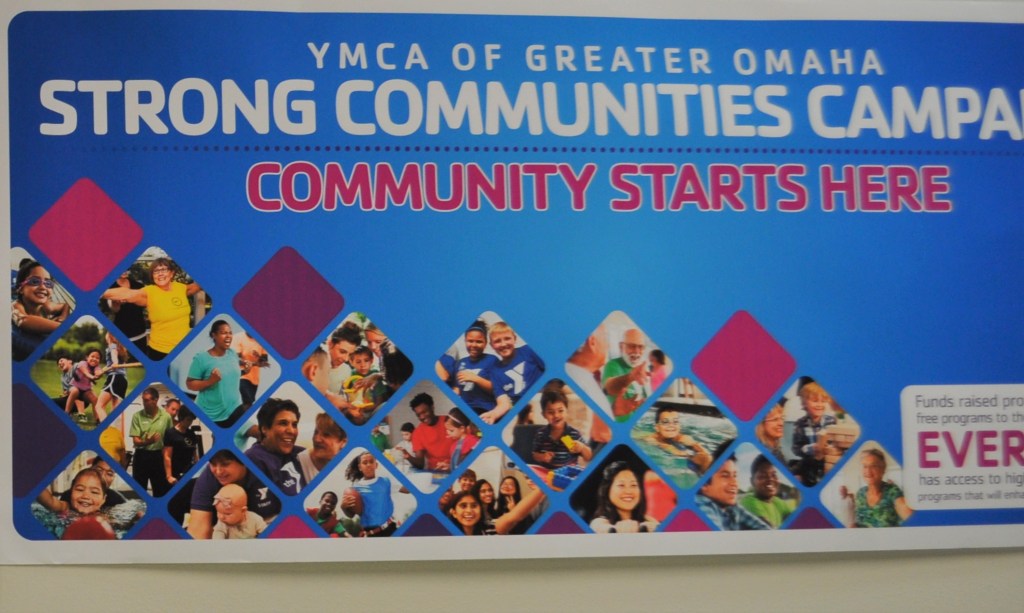
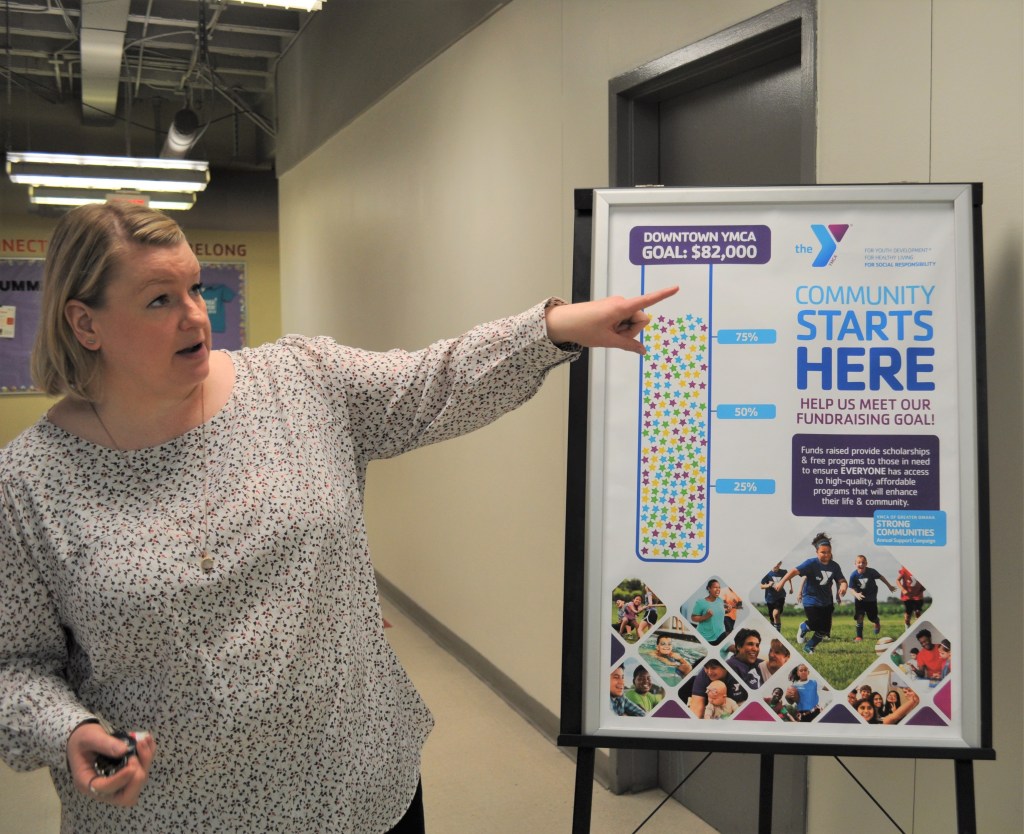
When Cramer started her position at the YMCA four years ago, she increased the sizes, colors and vibrancy of signs throughout the buildings like others nationwide. “The community starts here,” she said.
Cramer follows the YMCA’s guidelines of 17 colors, but uses her own graphic design skills for creative print and online projects.
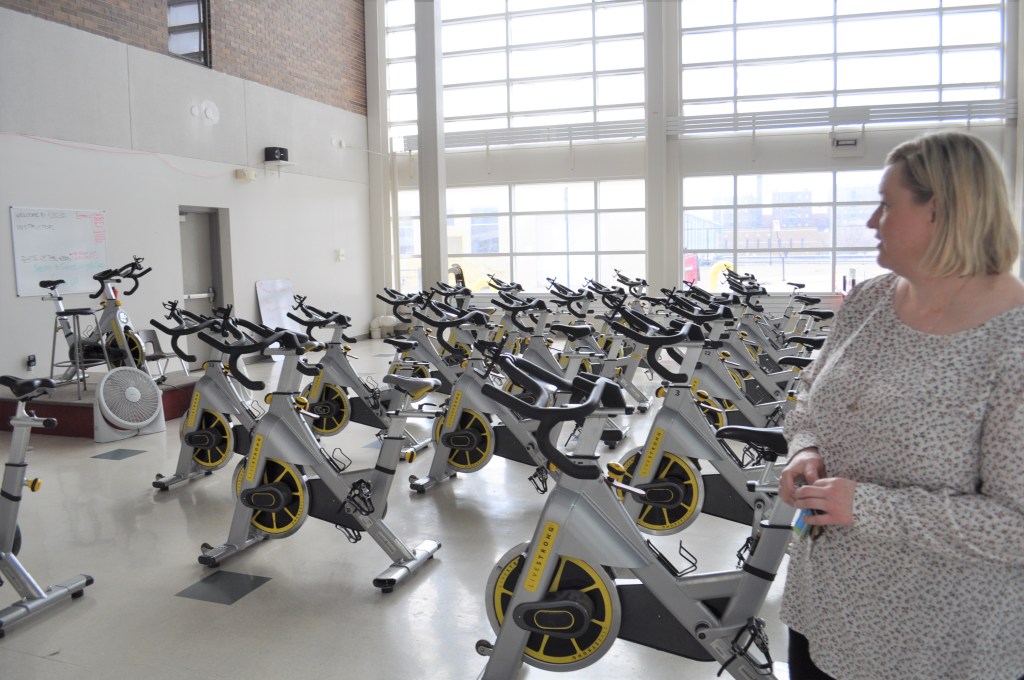
Wellness, swimming lessons and youth sports are of top importance to the Y. According to Cramer, the Y is adding a new social media position to find new audiences beyond Facebook for sharing its opportunities.
Yearly fundraising by each building provides scholarships for youth. The Y uses paid Facebook advertising for its donation campaigns.
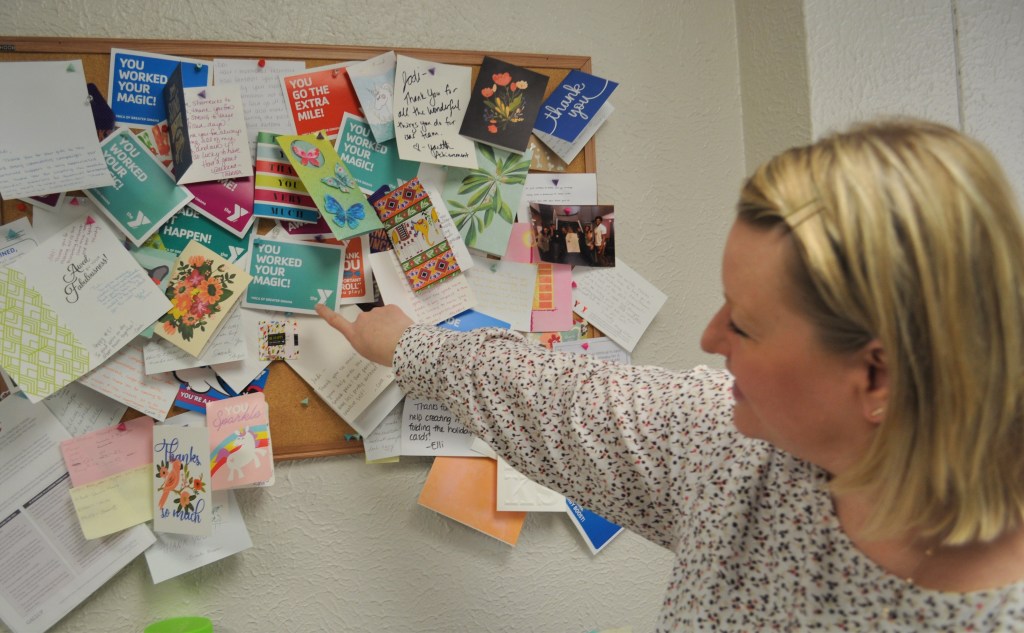
The thank you notes lining Cramer’s office show large community support and engagement for the Y’s programs.
The Y is now encouraging members to maintain their memberships during the COVID-19 crisis, as these fees cover facilities and staff costs. Yearly paid membership campaigns use Facebook ad placement.
The visual change may not be as noticeable to long-time members, but for a prodigal member returning to the Y, the changes are immediate.
From colorful signage, to an online presence with a focus on telling the stories of its members and its open-arms policy, the Omaha metro area YMCAs have a visual and expanding presence in the community.
According to Jodi Cramer, marketing manager for the YMCA of Greater Omaha, using social media and colorful graphics is large component of the Y’s branding and outreach. Over the last decade, nationwide YMCAs have dropped the two-color black/red color scheme from the Young Men’s Christian Association to the colorful and inclusive new name – the Y.
“Our strategy is to tell the story of the Y,” she said.
“Our logo is bold, active and welcoming, and it adds color and vibrancy to our identity.”
As the Y has been incorporating its new identity changes, it is also looking to increase its online presence with a new staff member for a social media position.
Cramer said the social media presence right now for the metro area Y’s 10 locations is mostly found on Facebook. The pages are cohesive, follow brand guidelines, are colorful but reach mainly an older audience. Soon, the Y will be forging into Instagram and Twitter.
“We will have a social media plan for each week, and each branch will have its own goal for fundraising and support. We are not there yet, but we are stepping up,” said Cramer.
And along with this physical change, the zoo has found a secret sauce for creating vibrant social media growth and presence as well.
According to Andrea Hennings, social media manager for the zoo, this change has come from involving the staff at the zoo in its social media efforts; especially the zookeepers.
“We didn’t want to post anything on social media then out of fear, staff-wide,” she said of when zoo first started seriously focusing on social media around eight years ago. “Now we are comfortable staff-wide and we are having fun sending out information that people will understand.” And the community is paying attention.
“Our team of one is actually the entire zoo with the keepers up front,” Hennings said.
Because the keepers are the ones who know about the animals, the births, and have a focus on a conservation mission, they now attend monthly meetings with the marketing team. Together they plan social media promotions, calendars and schedules.
The zookeepers also post pictures on their own of the animals, and of behind-the-scenes photos.
“We share their photo credits so people can see they are coming from keepers; it puts a different spin on our content. Keepers are the celebrities of the zoo,” said Hennings.
The zoo’s very engaging presence social media presence is found on Facebook, Twitter, Instagram, a mobile app, and the zoo’s website. According to Hennings, each app has a slightly different focus but all are well received.
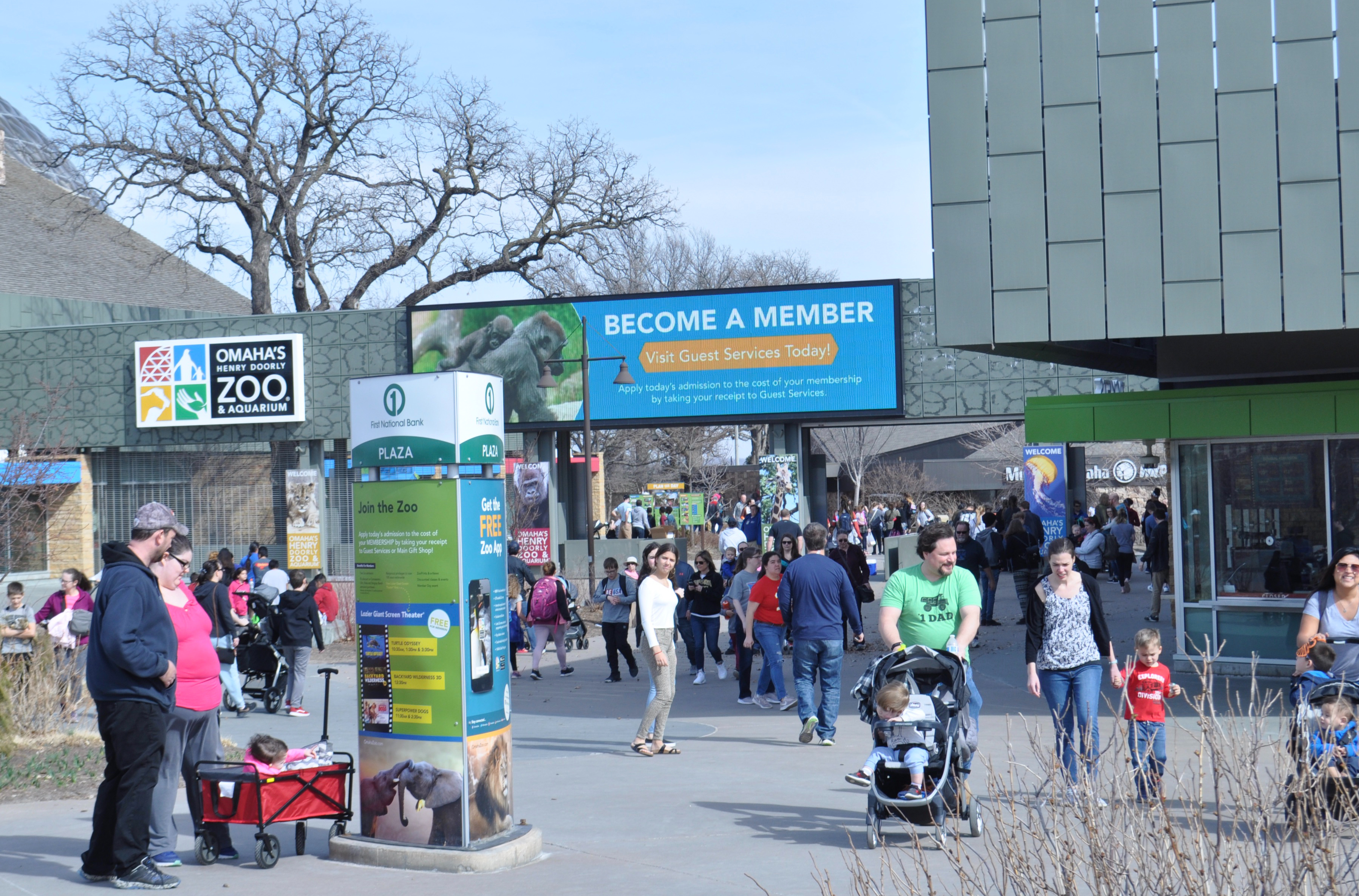
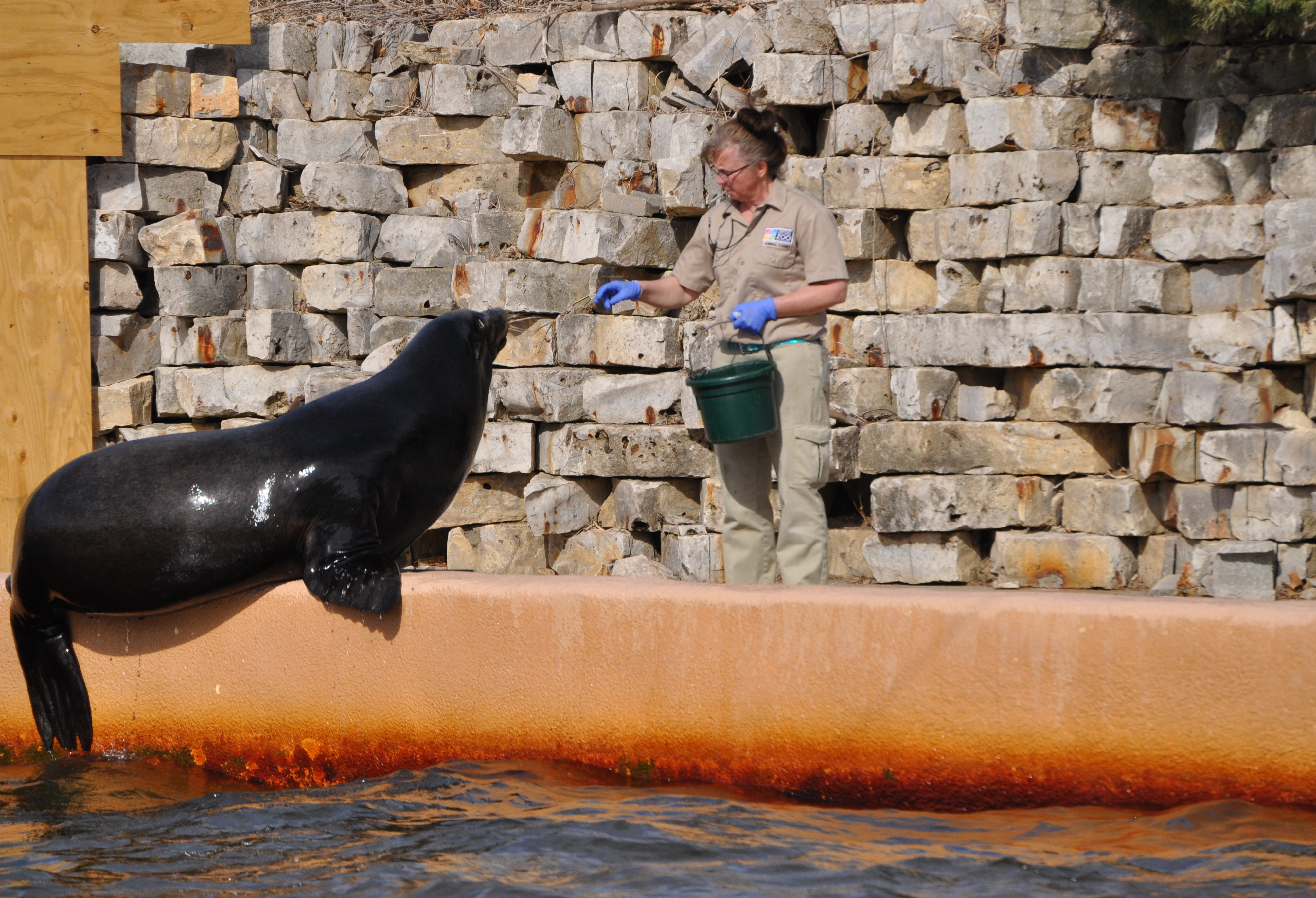
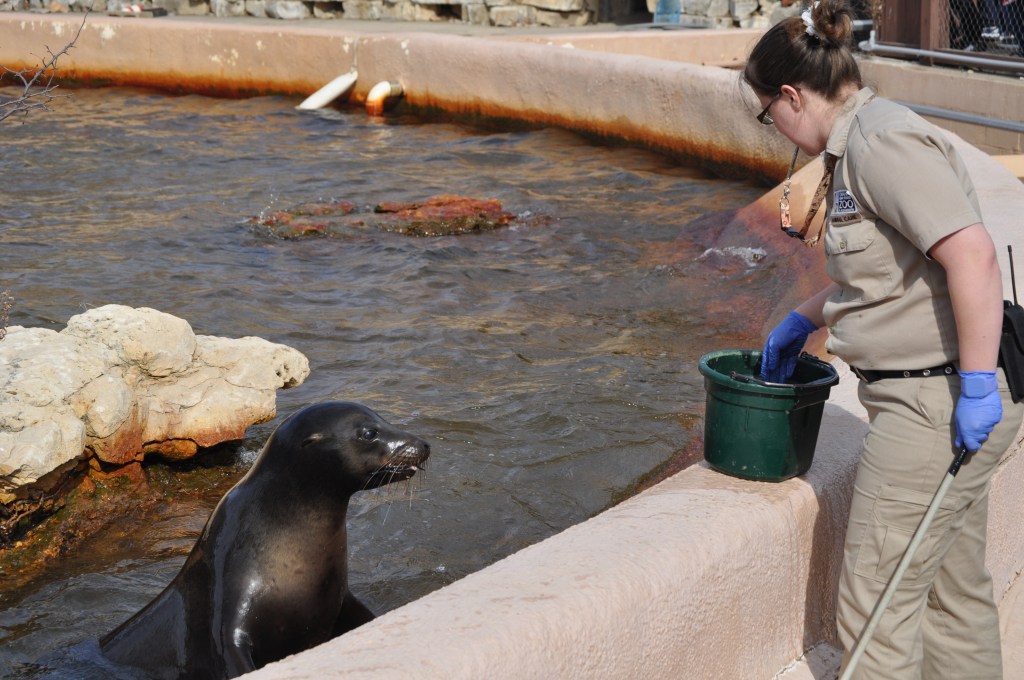
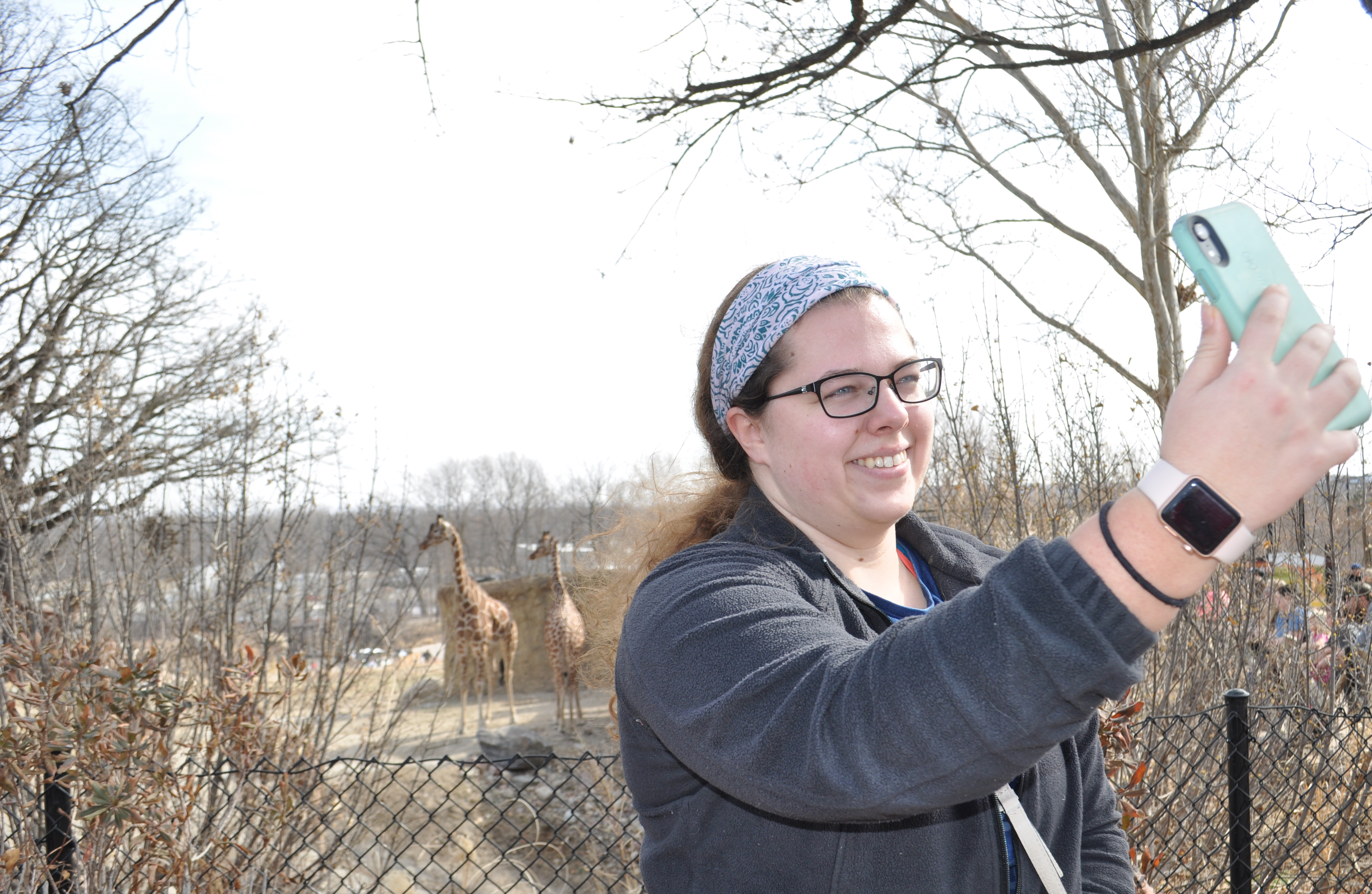
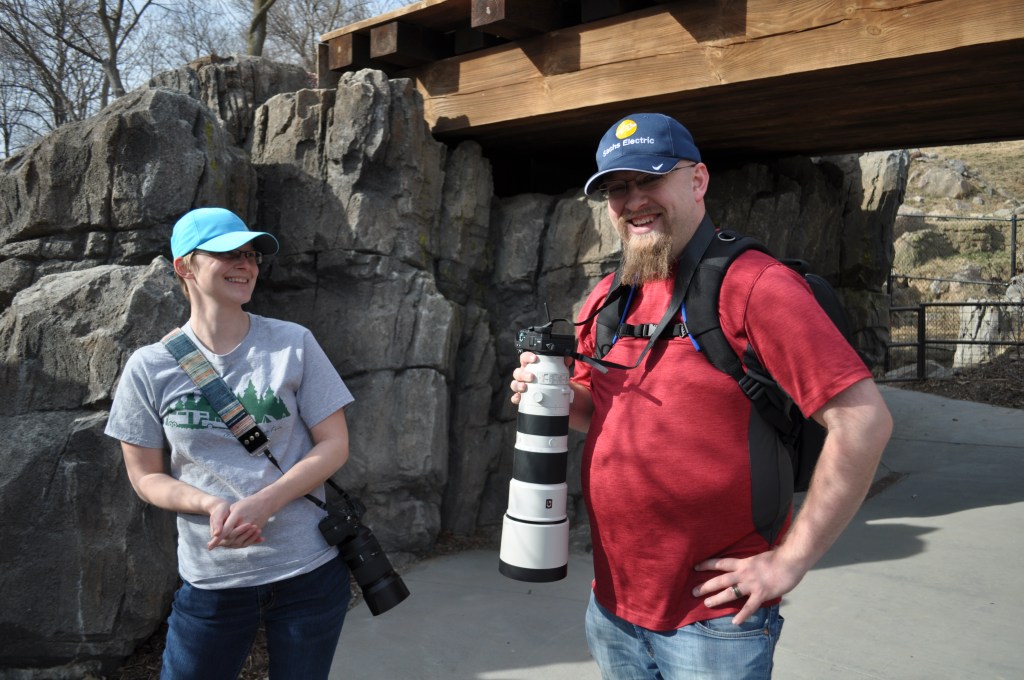
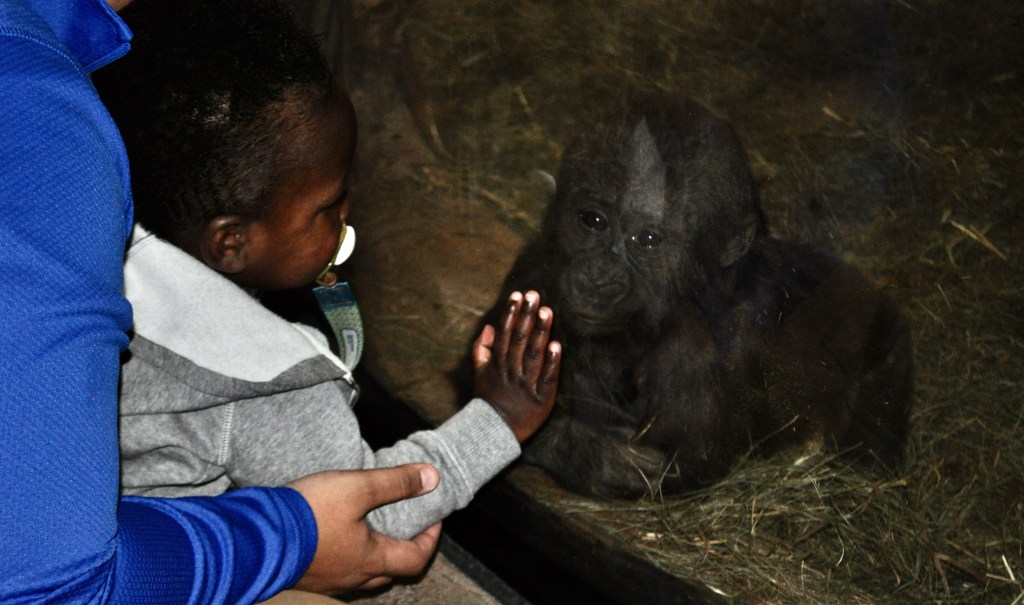
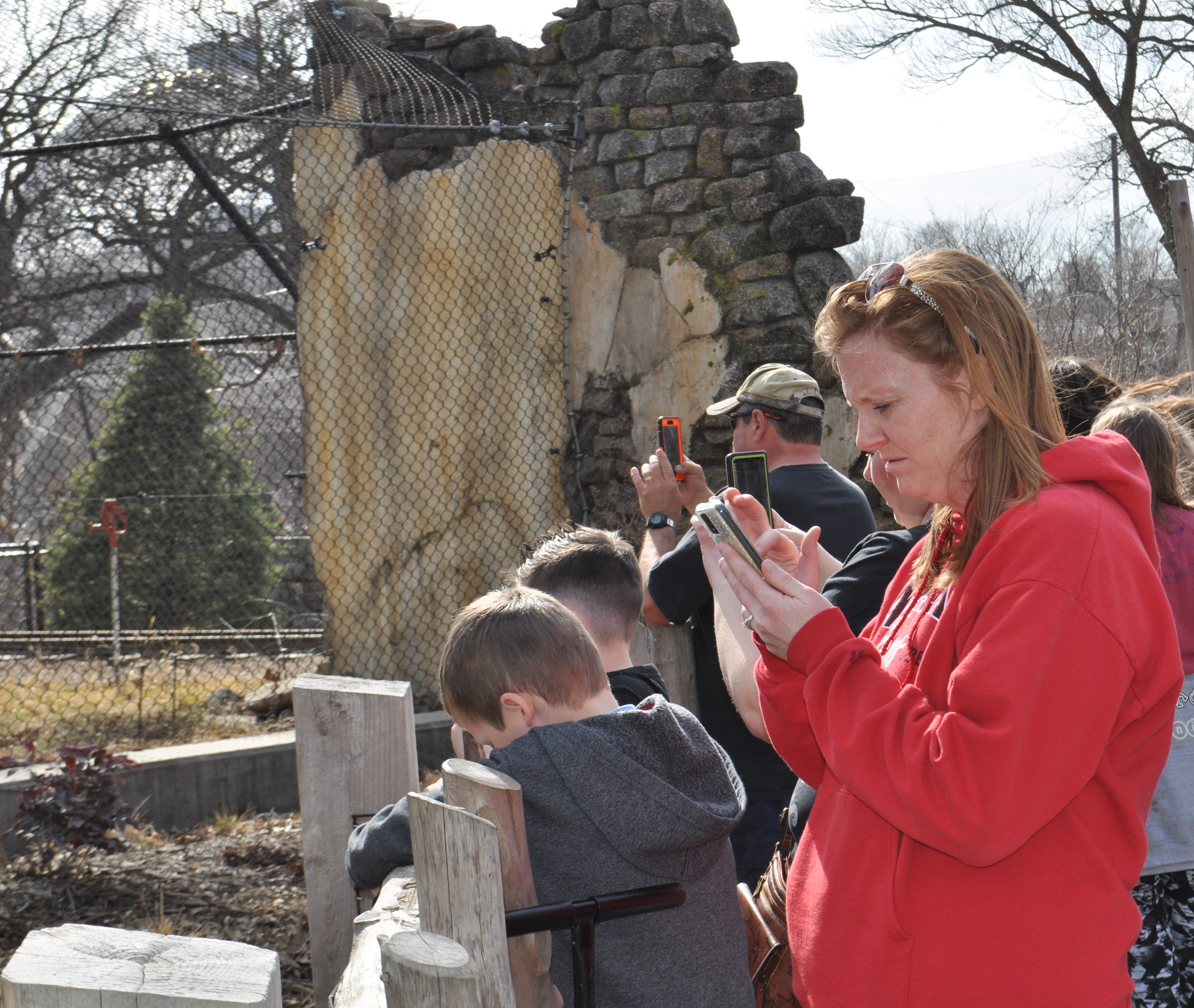
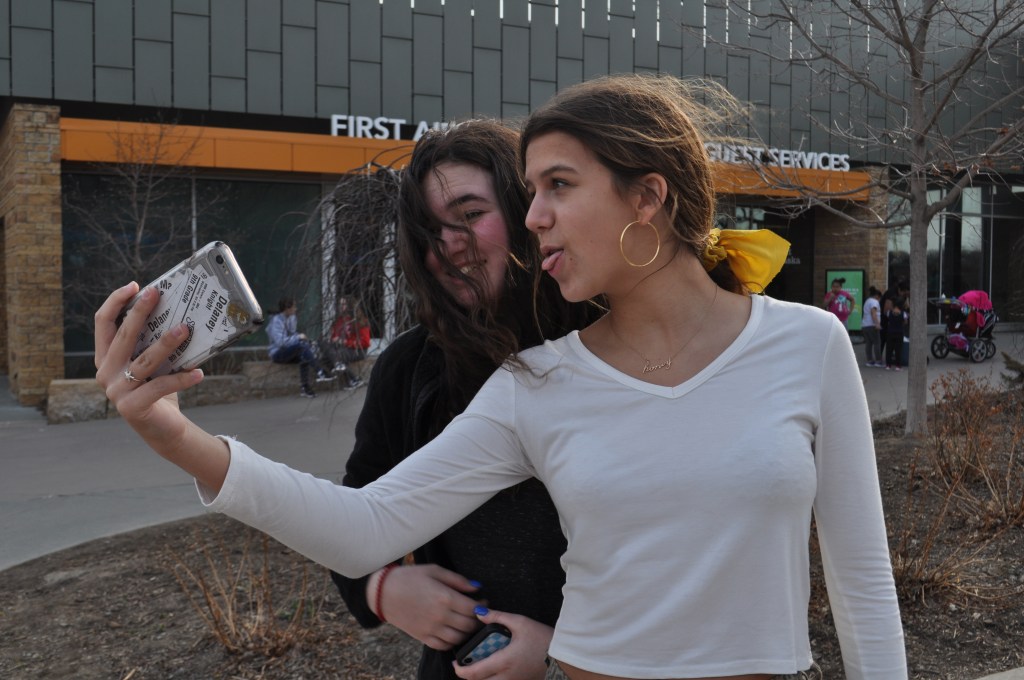
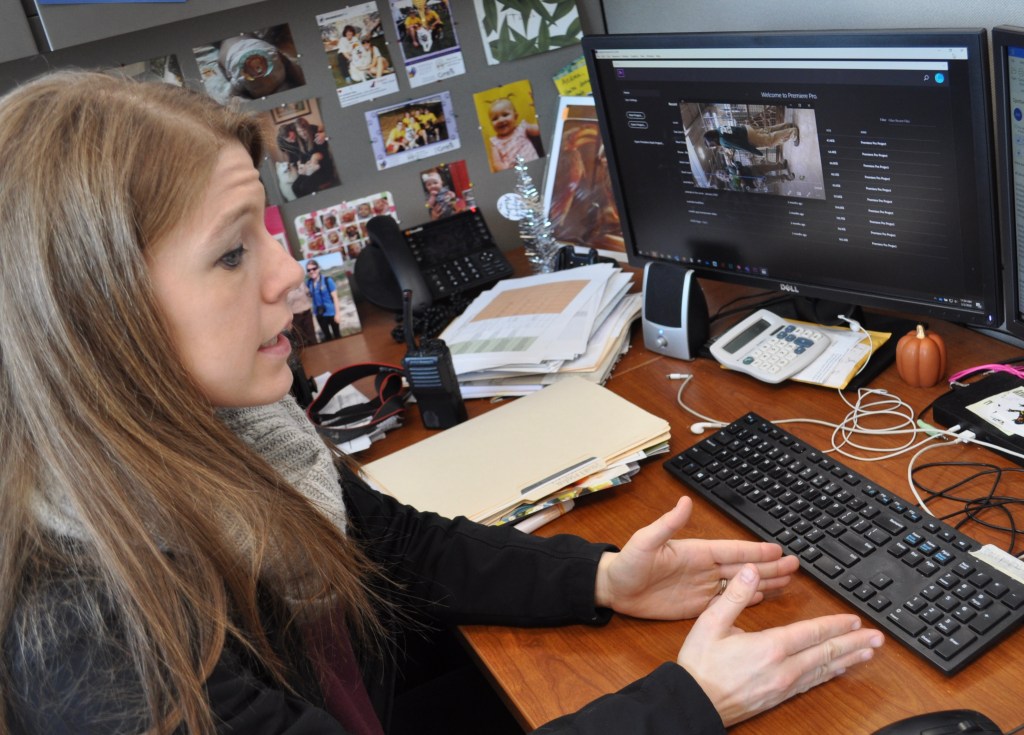
March 7, 2020 was the second busiest day of the year so far at the Omaha Henry Doorly Zoo and Aquarium. Annual visitation reaches more than 2 million each year, making the zoo Nebraska’s top tourist attraction. Zookeepers Christine and Amanda head to feed the sea lions amidst the 15,000 visitors they expected at the zoo on the first Saturday of March.Zookeeper Christine feeds a male sea lion. According to the zoo’s marketing department, “Keepers are the celebrities of the zoo!”Amanda also feeds a sea lion Saturday afternoon. The keepers are in touch with the animals, and know what is happening in their lives. “Keepers have that wow factor!” says the marketing department. Social media experiences are found all over at the zoo. Here, Miranda takes a selfie after watching the giraffes galloping. The millennial crowd visits the zoo’s Instagram site most often where the zoo features fun and creative photos with a conservation message.Raesha and Riley are avid hobbiest photographers who sometimes share their photos on the zoo’s Facebook site. According to the marketing department, the zoo’s “buying audience” —people who financially support the zoo ages 35-50 — mostly are engaging with the zoo on Facebook.Jayden, 19 months, shares a moment with a baby gorilla in the gorilla house. At the zoo, every exhibit is a viral sensation ready to happen. Fans of the sloth bear caught every one of his dramatic moves Saturday afternoon. “We have a very active base on social media, and it’s very overwhelming because everybody is paying attention to the zoo,” said Andrea Hennings, director of social media at the zoo. Maddy and Delaney Snapchat friends who they discovered were also at the zoo from social media. While the zoo is not currently active on Snapchat, staff members are monitoring and exploring its value. The zoo’s social media scheduling calendar now comes directly from input from the zookeepers. Andrea Hennings, social media manager for the Omaha Henry Doorly zoo, demonstrates the importance of the size and direction of videos for apps used on smartphones.
It’s located in a small office in central Omaha, but Big Brothers Big Sisters of the Midlands (BBBS) has packed a powerful punch and uplifting influence on thousands of youth throughout the metro area.
And recently, BBBS staff shared a secret which has helped the local agency earn a national award for service; a secret which focuses on engaging mentors through face-to-face contact.
A secret that truly puts the “social” in social media.
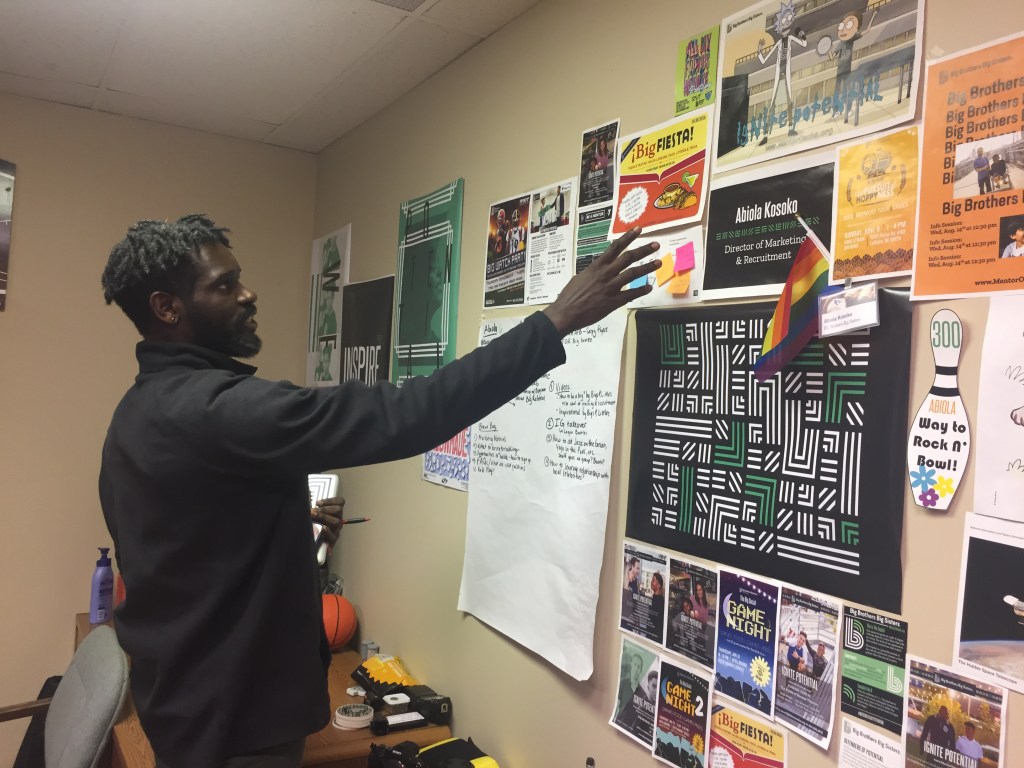
“Face-to-face and social media are the most effective ways of communication to me. I believe that when you communicate something in person, it becomes much more meaningful,” said Abiola Kosoko, director of marketing and recruitment of the Omaha agency.
Named the 2019 national mid-large agency of the year from more than 300 national agencies in the BBBS network, this mentoring-based non-profit agency has a strong presence in the Omaha area. Its leadership and Board of Directors reads like a list of Who’s Who from Omaha businesses royalty.
The BBBS of the Midlands office, the national headquarters and other affiliates have recently rebranded. They changed their logo, colors and online presence as part of their strategy to recruit new and diverse volunteers. These 300 agencies share the same marketing presence.
But each affiliate promotes itself differently to gain new volunteers, and this is where the BBBS of the Midlands shines.
“It’s a hard thing for people to become active by just reading about us. But when they see us in person and know our stories better, then that makes it easier for people to want to be part of our organization,” said Kosoko.
Abiloa Kosoko, director of marketing and recruitment with Big Brothers Big Sisters of the Midlands shows posters from his agency’s sponsored recruitments and retention events.
Kosoko said the agency staff have many ways of actively recruiting volunteers.
These methods include BBBS staff attending fairs, luncheons, informational sessions at work places and spending time talking to potential volunteers face-to-face. They visually market themselves through billboards and printed material, and they have a physical presence at events all over the city.
Social media also plays a large role in attracting new audiences and retaining new volunteer relationships. Facebook, Instagram, LinkedIn, Twitter and YouTube are all part of BBBS’s social media strategy.
Because volunteers are the core to keeping the agency running and consistently helping youth, their recruitment is an ongoing job and of top importance.
“We have to be at places. With our message, we have to reach out and talk to people. Our end goal is finding mentors,” Kosoko said.
And these efforts of personal attention are paying off and garnering national attention.
“We won our award of excellence for having some of the longest lasting big/little relationships in the nation, “ said Kosok. “Our mentor/mentee relationships last an average of 3½ years, higher than the national average of two.”
Right now the agency has around 540 active big/little mentor relationships, and a waiting list of 120 youth.
According to Kosoko, kids in the Omaha metro area can sign up easily with the help of parents or guardians, starting at age 7.
Adult volunteers are the harder people to find. Making sure they are ready for the commitment and the relationship is of top importance. Each volunteer goes through a long match process with many background checks for the safety of the children.
“We dont sugar-coat anything; this is an actual relationship,” said Kosoko. “Many of the kids are from poverty stricken households, and they need the volunteers to show they can commit.”
There are all sorts of different volunteers just like all the different kids. Each adult is different, has survived life so far, and learned a lot about life, he said.
“Some volunteers wonder how they can help; why they should be a mentor. Just being there for their ‘little’ and giving the kid someone to talk to is the focus,” he said. “You are making a living for yourself and can give insight.”
I’ve eschewed the site; for several reasons. One main reason is out of a defensive mechanism, based on the effects that social media had on my teenage daughter several years ago. Now at age 21 she is vibrant, healthy and happy; yet those high school years were rough, and a large part of that was due to social media.
However, I know it’s time to delve into this world; to take a chance. Inherently, I know there are some good aspects of Instagram and my distrust is waning. So going forward, as time allows, I’m ready to start learning more, both personally and professionally.
For the UNO Media storytelling class I looked at five media outlet accounts on Instagram. I had one hour to briefly search Instagram; and it proved fascinating. Following are my first immediate impressions. Just from reading one specific site that I adored, I know I’ll be back to Instagram and I can see the hook.
The five media outlets I looked at include National Public Radio, National Geographic, the Late Show With Stephen Colbert, and local media: the Omaha World Herald, and WOWT 6 News.
NPR: NPR has a following of 2.6 million. Its opening page features pictures with a variety of illustrations, people and locations. I personally liked the illustrations; so many concepts can be combined with a drawing or painting. The topics were varied and were very people-centric. Each post has garnered many comments; a random sampling showed a smattering of well-written, and controversial comments.
Like most everything NPR does, I’d give this an “A” based on my first impressions.
National Geographic This account has 131 million followers, and is vibrant with professional, engaging photos; as expected. These photos have all gained thousands of comments, and the posts feature pictures of animals, locations and things. I am coming back to this site, and will read and follow National Geographic. The comments ranged from emojis, slams, thoughtful additions, and many were in different languages. I am very interested in this account; and am giving it an “A+” for the quality and variety of photos and posts.
The Late Show with Stephen Colbert: While not a traditional news site, I do get some of my news from watching this show. This site looked quite entertaining, funny and newsworthy. It featured both people-centered breaking news and those people interviewed on the late-night show. More than 1.4 million followers were listed; and there were comments that were funny, brief but also snide and quite political in nature. Most of the pictures featured people, entertainers, celebrities, and newsworthy faces; no animals. My grade on my first impression would be an “A-“.
Omaha World Herald The OWH is my home-town newspaper. This is the first time I’ve looked at its Instagram account; it has 20.8K followers. The account shows local pictures of people, news, sports, animals, sports, weather, and more sports. It’s filled with sports; but I do believe that’s one big non-emotional, non-political and non-reactive draw to the OWH; and the OWH does well with reporting sports. There were very few comments, and very few toxic comments on that end. People seemed to like the few news stories that were features of people. It’s a big change from the national news outlets, probably because there were no known celebrities featured; and local news isn’t too exciting. The pictures were good; overall I’d give it a first impression of “B+” based on the quality pictures.
WOWT 6 News: This Omaha-based television news station has an Instagram presence; and it boasts 17K followers; I’m slightly surprised there aren’t more. But upon thinking about it, news is watched more by older people; and older people aren’t always on the forefront of social media. At first glance many of the stories feature words on the picture, explaining the picture. I liked that. A few blocks are in video format; and have just a black box as the picture. These need screenshots and images as they are slightly unappealing. There are very few comments, and I see very little interaction. I’d guess the WOWT’s website is where they have all the action. I’d give this Instagram account a “B-“.
These are a newbie’s first impressions. I’m going to download the app and start following National Geographic, and dream.
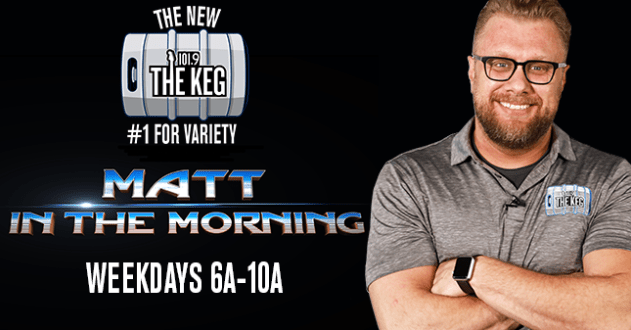
For the 45 minutes that Omaha radio personality Matt Tompkins talked to a UNO Media Storytelling class, the message he pounded was hard and consistent.
“Become really good at a lot of things,” he told the students. “Do not be expendable.”
Tompkins, who is a morning host at 101.9 The Keg, has a wide variety of radio and television production experiences. He is living what he is preaching. He has hosted and produced radio and television shows for both media in the Omaha metro area as well as SeriusXM and I Heart Media.
In the fast-paced and constantly changing world of media, Tompkins stressed three main factors for success that he has learned through his 15 years in the field. Those factors include quality, resilience and consistency; all of which he gave examples of how those traits helped him in his career.
As a UNO student himself, Matt took on varied internships, and learned several different skills that ultimately helped him with other positions. He encouraged the students to take on many different roles, all of which are learning opportunities.
“Learning the skills behind the camera literally put me in front of the camera,” he said, speaking of his 50-hour a week internship and other opportunities.
Those years of varied and hard work ultimately led to a successful Omaha-based late night comedy television show which Tompkins planned and produced with his brother.
“Effort is such a key ingredient, more so than just talent. Tons of effort and tons of talent make superstars.”
He also added that as radio stations focus on making money, the employees need to stay strategic in staying ahead and produce quality work, so they do not end up expendable.
“You want this radio station to think that by keeping me here, they can make money,” he said. “You want to develop a reputation where people won’t even question hiring you.”
And when things don’t go as expected, which does happen, Tompkins encourages resiliency. “Don’t let them get you down. Everyone on the planet has a good idea . . . you need to keep trying to be successful.”
My thoughts: as a student in this class, I wish this conversation could have gone on for hours longer. It was my first and fascinating glimpse into the radio media world. I guess I could take Matt’s advice, and learn more on my own! For more information, contact Matt at twobrotherscreative@gmail.com
Omahans could see the city’s streets’ conditions majorly improved upon voter approval in May of a $200 million transportation bond.
According to Mayor Jean Stothert at a January 23 press conference, more than 250 miles of streets will be rehabilitated annually throughout all of the city’s districts upon bond approval.




 Media Portfolio